
Professional Makeup Kit Essentials: what a working artist actually carries

A professional kit is a system, not a collection. It carries what the next face might need, organised in the order the face is done, kept clean between clients, and built from mixing skill rather than shelf-buying. This guide lists what a working bridal artist actually carries, what each brush is for, and what to buy first — and last — when starting out.
The principle: range through mixing
A kit does not need a bottle for every skin. It needs a run of shades across depths and undertones plus adjusters — yellow, red, white, a darkener — and the skill to mix on a palette. The same principle runs through concealers, lip colours and brow products: a few well-chosen shades and the ability to blend them cover almost everyone.
The kit, section by section
Hygiene and preparation
70% isopropyl alcohol (spray and immersion jar), brush cleanser and brush soap, metal spatulas, a steel palette, disposable mascara wands, lip applicators, sponge wedges, cotton buds and pads, tissues, hand sanitiser, a closed bag for used disposables, a bag for used brushes, headbands and capes, a small towel. Then skincare for prep: gentle cleanser, micellar water, hydrating serum, light and rich moisturisers, eye cream, lip balm, blotting papers. See Makeup Hygiene for Professionals.
Base
Primers (silicone smoothing, mattifying, hydrating); foundations — eight to ten shades across fair to deep in warm, neutral and olive undertones, in a satin long-wear liquid plus a cream for dry skin; adjusters (yellow, red, white, darkener); concealers in a light-to-deep run plus correctors (green, peach, orange, lavender); translucent and tinted setting powders, loose and pressed; setting and fixing sprays.
Face colour
Cream and powder blushes across peach, coral, rose and berry; cream and powder contours in neutral browns for three depths; a warm bronzer; matte and satin highlighters (no heavy glitter).
Eyes
One neutral matte palette (transition and crease shades across depths), one shimmer palette, a smoky/dark set; eye primer; gel liners in black and brown; a liquid liner; kajal pencils; brow pencil, powder and pomade in two browns; clear and tinted brow gel; black and brown mascaras; strip and individual lashes with adhesive; lash curler.
Lips
Lip liners — nude, red, berry, brown; lipsticks across warm reds, cool reds, nudes, pinks and berries in satin and matte; a gloss; a lip brush per client (disposable) or a cleaned steel-handled brush.
Tools
A hand mirror, sharpeners, tweezers, small scissors, tape, safety pins, a clip for hair, a fan or a small battery fan (drying, and for the client in heat), a portable ring light with a daylight setting, and a phone for the flash test.
The brushes and their jobs
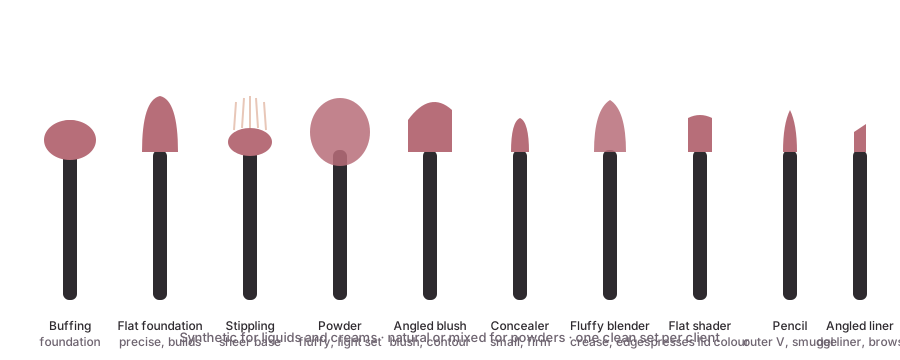
| Brush | Shape | Job |
|---|---|---|
| Buffing (dense, dome) | Dense, rounded | Buffs liquid foundation in thin layers |
| Flat foundation | Flat, paddle | Places foundation precisely; builds coverage |
| Stippling (duo-fibre) | Long soft fibres over dense base | Sheer, airbrushed-looking base; cream blush |
| Powder (fluffy) | Large, soft, loose | Light powder set; dusting away baking |
| Angled blush | Medium, angled | Blush on the apple, swept back; powder contour |
| Concealer (small, firm) | Small, flat or rounded | Spot coverage, under-eye, around the nose |
| Fluffy blender | Medium, soft, tapered | Transition and crease shadow; blending edges |
| Flat shader | Flat, dense | Presses lid colour on |
| Pencil | Small, pointed | Outer V, lower lash line, smudging liner |
| Angled liner | Thin, angled | Gel liner, brows |
Plus a spoolie, a fan brush for sweeping powder, and a small tapered blender for hooded or small eyes. Synthetic for liquids and creams (they do not hold product and they clean fully); natural or mixed for powders. A damp beauty sponge is a tool in its own right — disposable wedges or a fresh washed sponge per client.
What to buy first
A starting kit, in order of priority:
- Hygiene supplies — before any product.
- Six brushes: buffing, powder, two fluffy blenders, flat shader, angled.
- A foundation run of six shades in a satin long-wear liquid, plus yellow and red adjusters.
- Two concealers (light, deep), a peach and an orange corrector, a green corrector.
- Translucent loose powder and one tinted pressed powder; a setting spray.
- One neutral matte palette; eye primer; black gel liner; kajal; mascara.
- Brow pencil and powder; clear gel.
- One cream blush, one powder blush; a neutral contour; a matte highlighter.
- Three lip liners, four lipsticks.
- Lashes, adhesive, lash curler.
Airbrush equipment, a second shimmer palette, more foundation shades and specialist brushes come later, when bookings ask for them.
Organisation
Pack in the order of the face: prep → base → colour → eyes → brows → lips → setting, each in its own case or pouch, labelled. Disposables in one closed bag, used tools in another, clean tools rolled. An artist should be able to find any item without looking, at a 5 a.m. call in a hotel bathroom.
Common mistakes
- Buying shades instead of learning to mix.
- Skipping hygiene supplies to afford another palette.
- Natural-hair brushes for cream products (they hold product and never clean fully).
- A kit organised by brand instead of by the face.
- Carrying everything to every booking; a trial kit and a wedding kit are different bags.
From Chhaya Yadav's experience
Observations from bridal and teaching work in Jaipur — professional observations, not statistics.
- Adjusters do more work in my kit than any single foundation. Warm and olive medium-to-deep skins fall between shades; yellow and red drops on a palette solve what a shelf cannot.
- Students want thirty brushes and use six. The six on the starter list do ninety percent of a bridal face.
- The battery fan is the most-used tool at outdoor Jaipur weddings — for setting, and for keeping the bride from sweating through the base.
- Two bags: trial and wedding. The trial bag carries the range; the wedding bag carries what the trial decided, and nothing else.
Frequently asked questions
What should a beginner makeup artist buy first? Hygiene supplies, a small range of foundation shades that can be mixed, a nude and a deep concealer, translucent and tinted powders, one neutral eye palette, a cream blush, a brow product, black and brown gel liners, mascara, three lip liners and four lipsticks, and six brushes: buffing, powder, two fluffy blenders, a flat shader and an angled brush.
How many foundation shades does a kit need? Fewer than the shelf suggests. A run of eight to ten shades across depths with warm, neutral and olive undertones, plus yellow, red and white adjusters, mixes to almost any skin. Mixing skill replaces inventory.
Synthetic or natural brushes? Synthetic for liquids and creams — they do not absorb product and they clean fully. Natural or soft mixed bristles for powders, where they pick up and diffuse better. Modern synthetics do both well; hygiene favours synthetic.
Do I need an airbrush machine to start? No. Brushed bases come first; airbrush is a specialisation added once the base module is solid and the bookings justify the kit.
How is a professional kit organised? By the order of the face: hygiene and prep, base, colour, eyes, brows, lips, setting — each in its own case or bag, with disposables in a closed bag and used tools in another. The artist should find anything without looking.
Key takeaways
- Range comes from mixing, not from inventory: a shade run plus adjusters.
- Hygiene supplies first, six brushes second, products third.
- Synthetic for creams and liquids, natural or mixed for powders; a fresh sponge per client.
- Organise by the order of the face; carry a trial bag and a wedding bag.