
Makeup Hygiene for Professionals: sanitising products, tools and the working kit
Hygiene is the part of professional makeup that clients never see and can never afford to have missed. Every product, tool and hand that touches a face can carry bacteria, fungi and viruses to the next face. The standard that prevents that is not complicated, but it is exact: the right disinfectant used the right way, disposables where reusables cannot be cleaned, products handled so they are never contaminated, and a clear rule about when to refuse. This guide sets that standard out, product by product.
The principle
Contamination moves on three paths: product to skin (a shared lipstick), tool to skin (a brush used on two faces), and hand to everything (fingers in a pot, then on a face). Hygiene closes all three:
- Nothing goes from a container to a face and back. Product is decanted onto a clean palette with a spatula, or applied with a disposable.
- Nothing that touched one face touches another without being cleaned in a way that actually works — or it is thrown away.
- Hands are washed or sanitised before every client and after touching anything that is not the client.
Eyes and lips are the highest-risk areas — the eye because infection there is serious, the lips because cold sores are common and highly transmissible — so the rules are strictest there.
What alcohol does, and does not do
The working disinfectant of a makeup kit is 70% isopropyl alcohol (IPA). Public-health guidance puts the effective range for alcohols at roughly 60–90% in water; near-pure alcohol is less effective, because water is needed to denature microbial proteins and because 99% alcohol evaporates before it has had time to act. That is why the bottle says 70, not 99.
What it does: kills bacteria, fungi and many viruses on a clean, non-porous surface given enough contact time. What it does not do:
- It does not kill spores.
- It does not clean. Alcohol on a dirty surface disinfects the dirt. Wipe product off first.
- It does not penetrate. A spray on a sponge or a brush head cleans the surface of the fibres, not the product inside them.
- It does not last. It evaporates in seconds; the surface must stay visibly wet for its contact time — about half a minute for ordinary bacteria — which means spraying twice on a large surface, or immersing small metal tools.
- It damages some materials — rubber, some plastics and coatings — with repeated use.
Keep it in a spray bottle for surfaces and pressed products, and in a small jar for immersing metal tools.
The working kit
Every professional kit carries:
- 70% isopropyl alcohol in a spray bottle and a small immersion jar
- Brush cleanser (quick-dry, for between clients) and a proper brush soap for the end of the day
- Metal spatulas — several, so one is always clean
- A stainless-steel or disposable palette
- Disposable mascara wands, lip applicators, sponge wedges and cotton buds — enough for every client and then some
- Pencil sharpener kept sanitised
- Hand sanitiser and tissues
- A closed bag for used disposables and a separate one for brushes to be washed
Product by product
| Product | How it is contaminated | How it is kept clean |
|---|---|---|
| Liquid foundation, concealer (pump or tube) | Rarely, if never touched | Dispense onto a palette; never touch the nozzle to skin or brush |
| Cream products in pots | Fingers, used brushes | Scrape with a clean spatula onto the palette; spray the surface with 70% IPA after use and let it dry |
| Pressed powders, blushes, shadows | Used brushes | Spray lightly with 70% IPA after each client and let it dry fully before closing; use a clean brush every time |
| Lipstick bullet | Direct contact | Never applied from the bullet on a client. Scrape a portion onto the palette with a spatula; wipe the bullet with IPA |
| Lip gloss and liquid lipstick | Double-dipping the wand | Disposable applicator per client; the wand never goes back in |
| Mascara | Double-dipping the wand | Disposable wand per client, one dip only, never re-dipped; discard the tube two to four months after opening |
| Pencils (eye, lip, brow) | Direct contact | Sharpen before every client; wipe with IPA; the sharpener itself is sprayed |
| Gel liner in a pot | Used brushes | Scrape a small amount onto the palette; spray the surface after |
| Loose powders | Brushes, air | Decant a small amount into a lid; never dip into the jar |
| Setting spray | Nothing (no contact) | Keep the nozzle clean |
| False lashes | Reuse | Single use per client; disposable glue applicator |
Tools
- Brushes. Between clients: work the bristles on a paper towel with quick-dry brush cleanser until no colour transfers, then let them dry. This removes product and most contamination from the surface; it is not full sanitisation, which is why eyes and lips get disposables or a fresh clean brush. End of day: wash with brush soap, rinse until the water runs clear, reshape, dry bristles-down or flat — never standing up wet, which loosens the ferrule.
- Sponges. Disposable wedges per client, or a fresh washed sponge per client. A used sponge cannot be made safe with a spray.
- Metal tools (spatulas, tweezers, lash curler, sharpener): wipe clean, then immerse in 70% IPA for several minutes, dry.
- Airbrush gun. Cleaner run through after every client; the gun never touches skin, which is one of the method's real hygiene advantages — see What is Airbrush Makeup?.
- Palette and station. Wiped and sprayed between clients; a clean towel or disposable cover per client.
The workflow between two clients
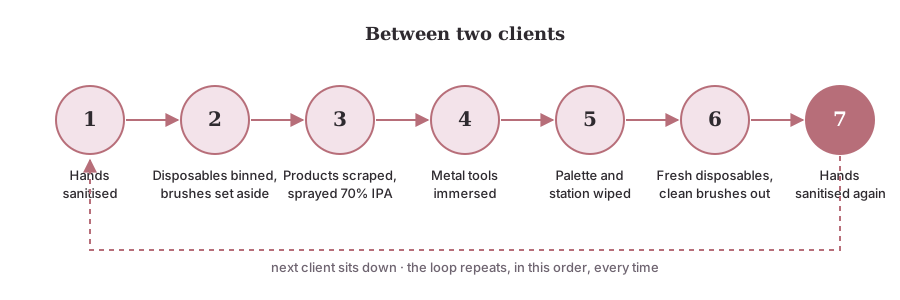
- Hands sanitised.
- Used disposables into the closed bag; used brushes into the wash bag.
- Products scraped clean and sprayed; pencils sharpened and wiped.
- Metal tools into the IPA jar.
- Palette and station wiped and sprayed; fresh cover laid.
- Fresh disposables and clean brushes laid out for the next client.
- Hands sanitised again — then the next client sits down.
When to refuse, and how
A professional refuses or works around the area when a client has:
- an active eye infection (redness, discharge, styes) — no eye makeup at all;
- a cold sore or open lip lesion — no lip products, and no lip work with any tool that returns to the kit;
- an open wound, weeping skin or a contagious skin condition in the area;
- head lice where hair work is involved.
Say it plainly and kindly, offer a reschedule or a look that avoids the area, and note it. The risk is to the client's other eye, to the artist, to every client after — and to the reputation that took years to build. Regulators' own advice to consumers — do not share eye cosmetics; discard the products used during an infection — applies with more force to a professional whose products meet dozens of faces.
Kit shelf life
Products age, and eye products age fastest. Mark the opening date on every product and discard on schedule: mascara after two to four months; liquid eyeliner similar; cream products within a year; powders longer but discarded at any change in smell, texture or colour. A product that has dried out is never revived with water or saliva.
Common mistakes
- Spraying a sponge or brush with alcohol and calling it sanitised.
- Using 99% alcohol because "stronger must be better".
- Double-dipping a mascara or gloss wand "just once".
- Sharpening a pencil only when it is blunt, rather than before every client.
- Working from the pot or the bullet because the spatula is "extra work".
- Letting a relative "quickly use" the bride's lipstick or kajal.
- Doing lip work on a visible cold sore because the client insists.
From Chhaya Yadav's experience
Observations from bridal work and teaching in Jaipur — professional observations, not statistics.
- Dust and heat are the kit's enemies here. Open powders and palettes pick up dust at an outdoor venue within minutes; lids stay closed, and only the products in use are out.
- The spatula is the rule that saves the most. Once students work from a palette instead of the pot, half the hygiene problems disappear on their own.
- Relatives and the bride's kit. At almost every wedding someone asks to "just use" the bride's lipstick. The answer is a disposable applicator and a smile; the bullet does not travel.
- A cold sore ends lip work, not the booking. A bride arrived at a trial with a cold sore; we did everything except the lips, planned a lip look she could apply herself from a fresh product on the day, and explained why. She was grateful, and so was the next client.
- Sharpen first, every time. Students sharpen when a pencil goes blunt. In class it is sharpen-and-wipe before every model, and the habit sticks.
Frequently asked questions
Why is 70% alcohol used instead of 99%? Alcohol needs water to work. Public-health guidance puts the effective range at roughly 60–90% alcohol in water; near-pure alcohol evaporates before it has acted and hardens the outside of microbes instead of penetrating them. 70% isopropyl stays wet long enough to do the job.
Can makeup brushes be fully sanitised between clients? Not reliably. Brushes and sponges hold product and moisture in their fibres; a spray of alcohol cleans the surface, not the core. Wash reusable brushes properly and let them dry fully, and use disposable applicators for anything that touches the eyes or lips.
Is it safe to share mascara between clients? No. Regulators advise against sharing eye cosmetics at all because another person's bacteria can cause infection. Professionals use a fresh disposable wand for each client and never dip a used wand back into the tube.
How do I sanitise a lipstick or cream product? Scrape the surface with a clean spatula, wipe with 70% alcohol, or spray and let it dry. Better still, decant a small amount onto a clean palette with a spatula and work from the palette, so the product itself is never touched.
When should a makeup artist refuse to work on a client? When there is an active eye infection, a cold sore, an open wound, or a contagious skin condition in the area to be made up. Working on it spreads it to the client's other eye, to the kit and to the next client. Reschedule or work around the area.
How long does mascara last once opened? Manufacturers usually advise two to four months. Eye products have the shortest life because they are exposed to bacteria on every use. Date products when opened and discard on schedule.
Key takeaways
- Nothing goes from a container to a face and back: spatula, palette, disposables.
- 70% alcohol, kept wet for its contact time, on clean non-porous surfaces — it does not clean, penetrate or kill spores.
- Brushes are cleaned between clients and washed at day's end; eyes and lips get disposables or a fresh clean brush.
- The between-clients loop is the same seven steps every time, hands first and last.
- Refuse or work around active eye infections, cold sores and open skin. Date and discard products on schedule.
Related reading
- What is Airbrush Makeup? — a method where the tool never touches the skin
- What is Foundation? — dispensing and applying the base cleanly
- Professional makeup courses at the academy — hygiene is taught as a habit, from the first class
- About Chhaya Yadav