
What is Foundation? Types, coverage and finish explained

Foundation is the makeup that evens the colour of the skin. It is a tinted film — liquid, cream, stick or powder — carrying pigments that match the skin's tone, spread thinly so the face reads as one even colour before anything else is applied. It does not change the skin's texture; it changes what the eye sees of its colour and shine.
Two words describe every foundation, and they are constantly confused: coverage (how much of the skin's own colour it hides) and finish (how the surface looks once it is on). This guide explains what foundation is made of, how coverage and finish work and why they are independent, the seven types and what each is for, and how a professional chooses one for a face and an occasion.
Foundation: a working definition
Foundation is a cosmetic film of pigment suspended in a carrier — an emulsion, an anhydrous cream, a wax stick or a pressed powder — applied to the face to unify skin tone. Everything else people ask of it (hiding blemishes, controlling oil, adding glow, lasting all day) comes from the carrier and the additives, not from the pigment.
Three things it does:
- Evens colour. Redness, sallowness and mild discolouration are reduced because the film adds a uniform layer of matched colour.
- Adjusts shine. Depending on the formula it can absorb oil (matte), leave the skin's own light (satin) or add reflection (dewy).
- Provides a base. Blush, contour and highlighter sit on it and blend into it.
Two things it does not do: it does not fill pores or lines (that is a primer's job, and only partly), and it does not hide strongly discoloured areas on its own (that is colour correction and concealer).
What foundation is made of
A liquid foundation is a small piece of engineering.
- Pigments. Titanium dioxide gives opacity — the coverage — and iron oxides (red, yellow, black) mixed in different proportions give the shade, from ivory to deep brown. A tinted moisturiser may carry only a few percent pigment; a full-coverage foundation can carry fifteen percent or more.
- The carrier. Most modern liquids are water-in-silicone emulsions: water droplets suspended in silicone fluids such as dimethicone and cyclopentasiloxane, which spread evenly and feel silky. Oil-in-water emulsions feel lighter and more like skincare; water-in-oil and anhydrous formulas feel richer and wear longer on dry skin.
- Fillers and spherical powders. Talc, mica, sericite, nylon and silica help the pigment spread evenly and, when spherical, scatter light for a soft-focus effect — the mechanism behind HD makeup.
- Oil absorbers. Clays such as kaolin and bentonite give matte formulas their dry feel.
- Film formers. Acrylates and similar polymers help the film adhere and resist transfer. Volatile silicones evaporate after application, leaving the pigment and film behind — this is what "long-wear" and "transfer-resistant" formulas rely on.
- Skincare additives. Humectants and emollients adjust hydration; SPF ingredients add sun protection but can reflect a camera flash.
Knowing this explains most foundation behaviour: a matte long-wear formula feels dry because of clays and volatiles; a dewy formula feels slippery because of emollients and silicones; a powder is pigment and filler with almost no carrier at all.
Coverage and finish are two different things
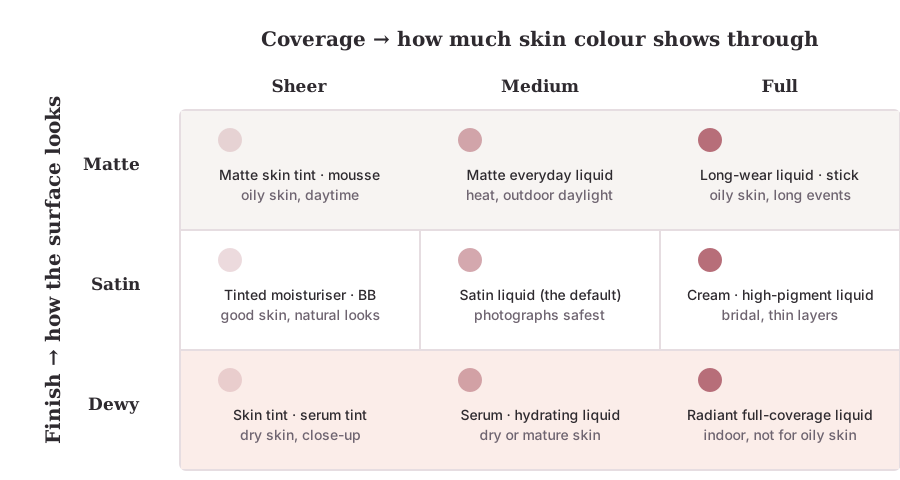
Coverage is opacity — how much of the skin's own colour shows through.
- Sheer / light: skin tints, tinted moisturisers, BB and CC creams. Evens tone slightly; freckles and mild redness show through.
- Medium: most everyday liquids. Evens tone clearly; blemishes soften but need concealer.
- Full: high-pigment liquids, sticks, some creams. Hides most discolouration in one or two layers.
Finish is the surface once the foundation has set.
- Matte: no shine; oil-absorbing; can look flat or dry if over-applied.
- Satin / natural: the skin's own light without added reflection — the most common finish and the safest for photographs.
- Dewy / radiant: added light from reflective particles or emollients; fresh in person, can read as oily under flash.
The two are independent. A full-coverage foundation can be dewy; a sheer tint can be matte. When a client says "I want full coverage but natural", she usually means full coverage with a satin finish, applied thinly — which is exactly what a professional builds.
The seven types of foundation
| Type | Form | Typical coverage | Typical finish | Best for | Watch out for |
|---|---|---|---|---|---|
| Skin tint / tinted moisturiser | Very light liquid | Sheer | Satin to dewy | Good skin, daytime, minimal looks | Little coverage; short wear |
| Liquid | Emulsion in a bottle or pump | Sheer to full | All | Almost everything; the professional default | Shade range and undertone matter most |
| Serum foundation | Thin liquid with skincare actives | Sheer to medium | Dewy | Dry or mature skin, natural looks | Slips on oily skin |
| Cream | Compact, pot or tube | Medium to full | Satin | Dry skin, mature skin, bridal with cream products | Heavy if over-applied; needs light setting |
| Stick | Wax-based solid | Medium to full | Matte to satin | Speed, travel, spot coverage, contour sticks | Can drag on dry skin |
| Mousse / whipped | Aerated cream | Light to medium | Matte | Oily skin, warm weather | Dries fast; blend quickly |
| Powder | Pressed or loose pigment | Light to medium | Matte | Oily skin, touch-ups, very quick work | Emphasises texture and dryness |
Airbrush foundations are a specialised thin liquid in silicone, water or alcohol bases, made for spraying — covered in What is Airbrush Makeup?.
Choosing a foundation: the professional order of decisions
A professional does not start with a brand. She starts with the skin and the occasion, in this order:
- Skin type today — not the client's usual type; skin changes with season and stress. Oily skin points to matte or satin liquids or powder; dry skin to hydrating liquid, serum or cream; combination to satin liquid with targeted powder; sensitive skin to tested products only.
- Coverage needed — decided by what must be evened, not by the label. Most faces need medium coverage with concealer in two or three places, not full coverage everywhere.
- Finish for the occasion — satin for photographs and long events; matte for heat, oil and outdoor daylight; dewy for short, close-up, indoor occasions on skin that is not oily.
- Shade and undertone — matched on the jawline in daylight, with the undertone (warm, cool, neutral) decided first. This is its own skill; see the guides on choosing the correct shade and on undertone in this hub.
- Wear conditions — heat, humidity, hours, touching (a veil, a dupatta, embraces). Long-wear and transfer-resistant formulas earn their place here.
- Camera — if there will be flash photography, avoid high SPF and heavy silica powder on the face.
Only then the product.
Application, briefly
- Skin first. Cleanse, hydrate, let moisturiser absorb for ten minutes. Foundation shows what is under it.
- Primer where it earns its place, not everywhere.
- Thin layers, buffed or pressed in with a dense brush or damp sponge; build only where needed.
- Concealer after foundation, only where foundation did not finish the job.
- Set lightly, where the skin oils; powder everywhere flattens the face and, if silica-heavy, risks flashback under flash.
- Check the neck and the jaw in daylight before moving on.
Common mistakes
- Choosing full coverage to hide texture. Texture is not colour; more product makes texture more visible.
- Matching shade to the hand or the wrist instead of the jaw and neck.
- Testing shade under warm indoor bulbs; the face then looks orange in daylight and grey in photographs.
- Using a powder foundation on dry skin, or a dewy serum foundation on very oily skin.
- Mixing an oil-based primer with a silicone-based foundation (or vice versa) and blaming the foundation when it separates.
- Setting the whole face heavily "so it lasts". A thin base with targeted setting lasts longer than a heavy one.
From Chhaya Yadav's experience
Observations from bridal work and teaching in Jaipur — professional observations, not statistics.
- Every bride asks for full coverage; almost none needs it everywhere. Two or three areas of concealer over a medium base photograph better than a full-coverage layer across the whole face, and feel lighter through a long function.
- Jaipur's dry heat pushes me to satin, not matte. Matte formulas that behave in humid cities can look chalky here by the evening. A satin base with matte control only on the T-zone holds its dimension.
- The shade is decided on the neck. Faces here are often a shade darker or more tanned than the neck and chest; matching the jaw to the chest, then warming the face slightly with bronzer, is what looks natural in photographs.
- Students reach for the product before they read the skin. The first thing I teach in the base module is to touch the skin and describe it — oily, dehydrated, flaky, sensitive — before opening a single bottle.
- The "long-wear" label is not a plan. Preparation, thin layers and targeted setting are the plan; the label is a helpful formula on top.
Frequently asked questions
What is foundation makeup used for? To even out skin tone and give the face one uniform colour before any other makeup goes on. It does not change the skin's texture; it evens the colour and, depending on the formula, adds or removes shine.
What is the difference between coverage and finish? Coverage is how much of the skin's own colour the foundation hides — sheer, medium or full. Finish is how the surface looks once it is on — matte, satin or dewy. They are independent: a full-coverage foundation can be dewy, and a sheer one can be matte.
Which type of foundation is best for oily skin? Usually a matte or satin liquid with oil-absorbing ingredients, or a powder foundation, set lightly. The bigger factor is preparation and setting; an oil-controlling primer and a light powder do more than the foundation type alone.
Which foundation is best for dry skin? A hydrating liquid, cream or serum foundation with a satin or dewy finish, over well-absorbed moisturiser. Matte and powder formulas emphasise flaking.
How much foundation should be used? As little as evens the skin. Professionals apply thin layers and build only where needed; a full face does not need a uniform thickness of product.
Does foundation stop skin from breathing? Skin does not breathe through its surface in that sense; it takes oxygen from blood. What foundation can do is trap oil and debris if it is not removed properly at night. Cleanse thoroughly, and skin under foundation stays healthy.
Key takeaways
- Foundation evens colour, not texture. Pigment gives shade and opacity; the carrier decides feel, finish and wear.
- Coverage (sheer, medium, full) and finish (matte, satin, dewy) are independent; ask for both by name.
- Seven types, one professional default: a liquid chosen for the skin on the day.
- Decide in order: skin today, coverage needed, finish for the occasion, shade and undertone, wear conditions, camera.
- Thin layers, targeted concealer, light setting. More product never fixes texture.
Related reading
- What is HD Makeup? — the light-diffusing particles that make a base read as skin
- What is Airbrush Makeup? — the sprayed alternative to a brushed base
- Professional makeup courses at the academy — the base module is where every course begins
- About Chhaya Yadav — the artist and educator behind these articles