
What is Contouring? Purpose, products and placement by face shape
Contouring is the use of a deeper, cooler shade to imitate shadow where the face recedes, and a lighter shade to imitate light where it comes forward. It does not change the face; it changes how light appears to fall on it. Placed well, it gives a photograph the dimension the camera's flat light takes away. Placed badly, it is the single most recognisable makeup mistake there is.
This guide covers what contouring does, the products and the difference from bronzer, the general placement of contour, blush and highlight, and — the part people actually search for — where each goes on six face shapes.
Contouring: a working definition
Contouring is shadow painting. The eye reads a darker, matte, slightly cool area as a surface turning away from the light, and a lighter, slightly reflective area as a surface facing it. A makeup artist borrows that: a cool-toned shade one or two steps deeper than the skin goes where a natural shadow would fall, and a lighter shade — the highlight — goes where light would naturally strike.
The purpose is proportion, not drama. Most contouring nudges a face toward balanced proportions — narrowing what is wide, lifting what sits low, softening what is angular — and restores the dimension that even lighting and flash photography flatten.
Three products are involved and are often confused:
| Contour | Bronzer | Highlighter | |
|---|---|---|---|
| Imitates | Shadow | Sun | Light |
| Tone | Cool or neutral, matte | Warm, matte or soft sheen | Light, matte or reflective |
| Goes | In the hollows and recesses | On the high, sun-hit points | On the points that catch light |
| Depth vs foundation | 1–2 shades deeper | 1–2 shades deeper and warmer | 1–2 shades lighter |
Using bronzer as contour is the commonest error: it puts a warm colour in a place that should look cool, and the result is an orange stripe rather than a shadow.
Cream vs powder contour
- Cream blends easily, forgives mistakes, sits in the skin and suits dry, normal and mature skin. It goes on before powder.
- Powder is buildable, controls oil and suits oily skin and quick work. It goes on after the base is set.
- Sticks are firm creams: fast and precise, but they drag on dry skin.
The professional rule is texture consistency: cream products over a cream base before any powder; powder products over a set base. Cream over powder pills and patches. For long functions, many artists lay a cream contour first and reinforce it with a light powder contour — the cream gives longevity and the powder gives control.
Shade: one to two shades deeper than the foundation, in the same undertone family, leaning cooler or neutral. Fair, cool skin takes soft taupe and greyish brown; medium, warm skin takes neutral to warm caramel; deep skin takes rich, cool-neutral brown. Avoid anything orange, grey-ashy or pink.
Tools: a small angled or tapered brush for placement, a fluffy brush or damp sponge for blending. The blending brush is the important one.
General placement
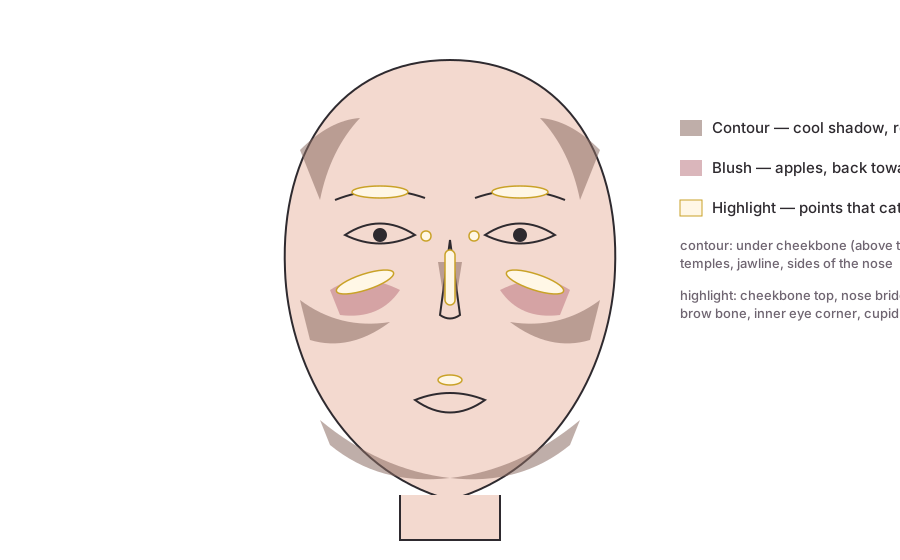
- Contour: the hollow under the cheekbone (find it by sucking the cheeks in — then place the product slightly above that line so it lifts rather than drags), the sides of the forehead at the temples, along the jawline, and lightly down the sides of the nose.
- Blush: on the apple of the cheek, blended back and up along the cheekbone toward the temple.
- Highlight: the top of the cheekbone, the bridge of the nose, the brow bone under the arch, the inner corner of the eye and the cupid's bow.
Blend every edge until it disappears. A contour is a gradient, not a line.
Placement by face shape
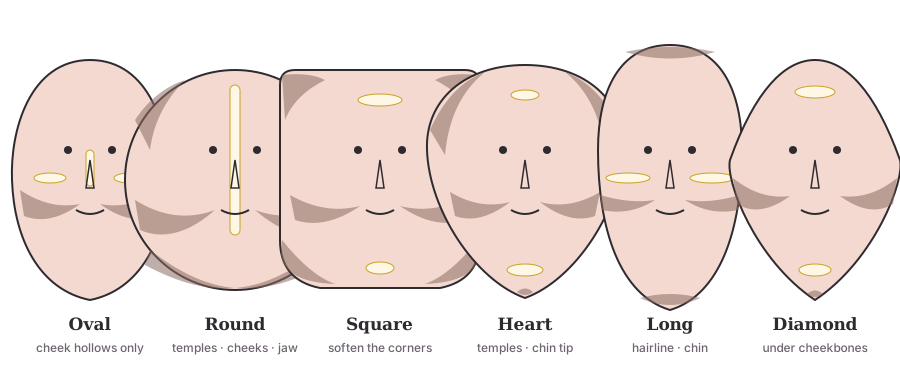
Identify the shape first. Hair back, straight into a mirror in daylight. Compare four things: the width of the forehead, the width of the cheekbones, the width of the jaw, and the length of the face against its width.
Oval
Widest at the cheekbones, forehead slightly wider than the jaw, gently curved chin; length about one and a half times the width. Already balanced.
- Contour: cheek hollows only, lightly. Forehead and jaw need nothing.
- Highlight: cheekbones, nose bridge, brow bone.
- Blush: apples, blended toward the temples.
Round
Width and length nearly equal, full cheeks, soft rounded jaw with little visible bone.
- Contour: a gentle "3" shape on each side — temples, under the cheekbone, along the jaw — to create angles the face does not show. Keep the cheek contour angled up toward the ear, never horizontal.
- Highlight: the centre of the face — forehead centre, nose bridge, chin — to add length; keep highlight off the outer cheeks.
- Blush: slightly above the apples, swept toward the temples for lift.
Square
Forehead, cheekbones and jaw roughly the same width; strong, angular jaw and a straight hairline.
- Contour: soften the corners — the edges of the forehead at the hairline and the corners of the jaw — and the cheek hollows. The goal is to round the angles, not deepen them.
- Highlight: forehead centre, cheekbones, chin centre.
- Blush: on the apples in a soft round shape, blended up.
Heart
Wide forehead and cheekbones narrowing to a pointed chin.
- Contour: the sides of the forehead from the hairline down the temples, into the cheek hollows; a small touch at the tip of the chin.
- Highlight: the centre of the forehead sparingly, the cheekbones, and the chin to widen it visually.
- Blush: below the apples, blended out horizontally rather than up, to balance the width at the top.
Long (oblong)
Noticeably longer than wide; cheekbones, forehead and jaw similar in width; often a high forehead or long chin.
- Contour: along the hairline across the top of the forehead and under the chin to shorten; cheek hollows placed more horizontally than upward, to add width.
- Highlight: the cheekbones outward toward the ears, never down the centre line.
- Blush: on the apples, blended horizontally toward the ears.
Diamond
Narrow forehead and jaw, wide, high cheekbones — the widest point is the middle of the face.
- Contour: just under the cheekbones to soften their width; a little at the tip of the chin.
- Highlight: the forehead centre and the chin to broaden the narrow points; cheekbones lightly.
- Blush: on the apples, blended slightly forward rather than out.
Real faces are combinations. Read the proportions, borrow from the two nearest shapes, and let the photograph — not the chart — decide.
Contouring for photographs
The camera flattens. A face that looks dimensional in a mirror can photograph flat under even lighting and flash. That is why bridal and editorial contouring is a touch stronger than daytime contouring — but stronger means more blended, never darker at the edge. Two checks: the profile in a mirror (a good contour is visible only as shape, not as a stripe) and one photo under flash in a dim room.
Common mistakes
- Bronzer used as contour — warm colour in a cool place; the orange stripe.
- Too dark, too warm, too low. Contour that sits under the cheek hollow drags the face down; placed just above the hollow, it lifts.
- A line, not a gradient. If you can see where it starts, it is not blended.
- Cream over powder. It pills; order matters.
- Highlight on textured or oily areas. Shimmer magnifies pores and shine; use a matte highlight or none there.
- Chart-following. Placing contour where the diagram says without looking at the actual face in daylight.
From Chhaya Yadav's experience
Observations from bridal work and teaching in Jaipur — professional observations, not statistics.
- Round faces and heavy jaw contour are the commonest bad pair. A hard jaw contour on a soft round face reads as a stripe in every wedding photograph. A lifted cheek contour and a centre-face highlight do the job without the line.
- On warm, deeper skin the cool-grey "contour" shades from international ranges look ashy. A neutral-brown one to two steps deeper than the foundation — never grey, never orange — is what reads as shadow on most of my brides.
- Cream first, powder over, for anything longer than four hours. Powder alone fades and creams alone move under a dupatta; the pair lasts.
- Students contour the chart, not the face. In class the first exercise is to describe a model's proportions out loud before touching a brush. The contour follows from the description.
- The photograph in the dim corner under flash tells the truth about every contour, every time.
Frequently asked questions
What does contouring do? It uses a shade slightly deeper and cooler than the skin to create the look of a shadow where the face recedes — under the cheekbone, along the jaw, at the temples — and a lighter shade where the face comes forward. Light and shadow change how the structure reads without changing the structure.
What is the difference between contour and bronzer? Contour imitates shadow, so it is cool or neutral and goes in the hollows. Bronzer imitates sun, so it is warm and goes where the sun would hit — the high points of the cheeks, the forehead, the bridge of the nose. Using bronzer as contour gives orange stripes.
Is cream or powder contour better? Cream is easier to blend and more forgiving on dry or mature skin; powder is buildable and controls oil. Professionals often use cream under a light powder for long events. Keep textures consistent: cream on cream, powder on powder.
How do I know my face shape? Pull the hair back, look straight into a mirror in daylight, and compare the width of the forehead, cheekbones and jaw and the length of the face. Widest at the cheekbones with a gently pointed chin is oval; equal width and length with a soft jaw is round; a strong, wide jaw is square; a wide forehead narrowing to the chin is heart; noticeably longer than wide is long; narrow forehead and jaw with wide cheekbones is diamond.
Should contour be one or two shades darker? One to two shades deeper than the foundation, in the same undertone family but cooler or neutral. Too dark or too warm reads as a stripe, especially in photographs.
Where should highlighter go? On the points that naturally catch light: the top of the cheekbones, the bridge of the nose, the brow bone, the inner corner of the eye, and the cupid's bow. Skip it on areas that are already oily or textured.
Key takeaways
- Contour imitates shadow (cool, in the recesses); bronzer imitates sun (warm, on the high points); highlight imitates light.
- One to two shades deeper, same undertone family, cooler or neutral; never orange, ashy or pink.
- Cream blends and lasts; powder builds and controls oil; cream before powder, never after.
- Read the face's proportions first, then adjust the standard map for oval, round, square, heart, long or diamond.
- Blend until no edge exists, and check under flash.
Related reading
- What is Foundation? — the base every contour sits on
- What is HD Makeup? — why thin layers photograph better than heavy ones
- Professional makeup courses at the academy — face structure is taught on real models
- About Chhaya Yadav — the artist and educator behind these articles