
Skin Undertone Explained: warm, cool, neutral and olive — and how to identify yours
Undertone is the hue beneath the surface of the skin. It is what makes two people of exactly the same depth look different in the same foundation — one golden, one rosy, one slightly grey. It does not tan, flush or fade. Everything a makeup artist matches — foundation, concealer, contour, blush, lipstick — is matched to it first and to depth second, which is why it is the most useful thing a student learns in the first week.
This guide explains what undertone is and what it is not, the four families (warm, cool, neutral and the often-missed olive), the three home tests and exactly how far each can be trusted, how professionals confirm it, and how it drives every colour decision that follows.
Undertone: a working definition
Skin colour is built from several pigments at different depths: melanin (browns and yellows), haemoglobin in the blood (reds and blues), and carotene (yellows and oranges). What the eye sees is the sum. Depth is how much melanin there is — fair to deep. Undertone is the hue that the mix leans toward underneath. Overtone is what is on the surface today — a tan, a flush, acne marks, a green-grey cast — which can hide the undertone but does not change it.
| What it is | Does it change? | |
|---|---|---|
| Depth (skin tone) | How light or deep the skin is | Yes — with sun and season |
| Undertone | The hue beneath: warm, cool, neutral, olive | No |
| Overtone | The surface impression today: tan, redness, sallowness, olive cast | Yes — constantly |
Undertone and depth are independent. Fair skin can be warm or cool; deep skin can be warm or cool. The most common foundation mistake is matching depth and ignoring undertone: the shade is "right" in the bottle and orange or ashy on the face.
The four undertone families
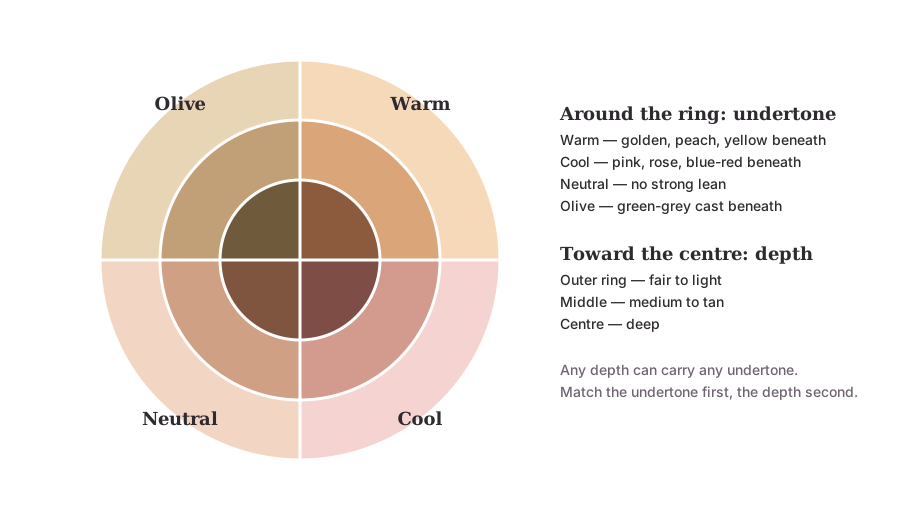
- Warm: golden, peachy or yellow beneath the surface. Gold jewellery flatters; veins look greenish; the skin tans to golden-brown rather than reddening.
- Cool: pink, rosy or bluish beneath. Silver flatters; veins look blue or purple; the skin tends to redden in sun.
- Neutral: no strong lean; both metals work; veins look blue-green. Neutral is common and is the easiest to match — most "neutral" foundation ranges are built for it.
- Olive: a green-grey cast beneath, common across South Asia and the Mediterranean. Olive is not a depth; it occurs from light to deep. It is the family most often mis-read, because quick tests return "neutral" or "cool", and then a cool foundation turns the face grey while a warm one turns it orange. Olive usually wants a neutral-to-warm shade with a touch of yellow or green.
The three home tests, and how far to trust each
1. The vein test. In bright, indirect daylight, look at the veins on the inside of the wrist.
- Greenish → likely warm. Blue or purple → likely cool. A mix, or hard to say → likely neutral (or olive).
- Limits: veins are blue-ish in everyone; the "green" is the skin's yellow over the blue. Deeper skin, warm bulbs, cool LED light, coloured walls and phone-camera processing all shift the reading. Treat it as one vote.
2. The jewellery test. Hold plain yellow gold and then plain silver against clean, unlit skin.
- Gold makes the skin glow → warm. Silver makes it glow → cool. Both → neutral.
- Limits: preference interferes; judge which metal makes the skin look healthier, not which you like. Olive skin often "passes" both without glowing in either.
3. The white-paper test. Hold a sheet of plain white paper beside the bare face in daylight and look at the skin against it.
- The skin looks yellowish or golden → warm. Pinkish → cool. Greyish or greenish → olive. Neither → neutral.
- Limits: only works in daylight; any tan or redness on the surface skews it.
Combine the three; agreement is a reliable read, disagreement usually means neutral or olive. Then confirm the way professionals do.
How professionals confirm undertone
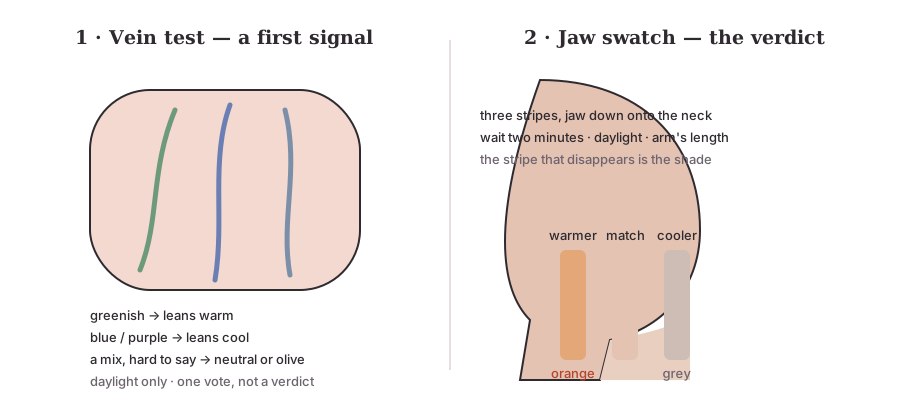
- Three swatches on the jaw, side by side — one warm, one neutral, one cool at the same depth — running from the jaw onto the neck.
- Wait two minutes for the formula to settle; some oxidise slightly darker.
- Look in daylight, from arm's length. The swatch that disappears is the undertone (and the depth). A swatch that turns orange is too warm; ashy or grey is too cool; muddy on olive skin means it needs more yellow-green.
- Check the chest, not the hand. Hands are darker and warmer than the face in most people; the chest is what the neckline will show in photographs.
This is the whole method. Quizzes and apps can help narrow the choice; the swatch decides.
What undertone decides
- Foundation and concealer: the undertone first, then the depth. See How to Choose the Correct Foundation Shade.
- Contour: always cooler or neutral relative to the skin, so it reads as shadow — but on warm and olive skin the cool "contour" shades of many ranges turn ashy; a neutral brown is safer.
- Blush: warm undertones take peach, coral and warm rose; cool take pink, berry and plum; neutral take most; olive takes warm rose and terracotta and can look muddy in cool mauves.
- Lipstick: warm — orange-reds, corals, brick, warm browns; cool — blue-reds, berries, mauves, cool pinks; neutral — most; olive — warm brick and brown-reds.
- Hair colour, jewellery, outfit: the same logic, which is why bridal consultations start with undertone before any look is discussed.
Common mistakes
- Reading undertone from the hand or wrist swatch instead of the jaw and chest.
- Testing under warm indoor bulbs (everything reads warm) or cool LEDs (everything reads cool).
- Calling olive skin "neutral" and then wondering why the foundation looks grey.
- Confusing a summer tan with a warm undertone; the tan is overtone and will fade.
- Matching a bride's foundation to her tanned face rather than to her chest, so the neckline shows a line in photographs.
From Chhaya Yadav's experience
Observations from bridal work and teaching in Jaipur — professional observations, not statistics.
- Most of my brides are warm or olive, and olive is the one that gets missed. A quick vein test on olive skin says "cool"; the cool foundation then photographs grey. The three-swatch test on the jaw catches it every time.
- The face is usually darker and warmer than the chest here. Sun, scooters and the wedding-season tan line at the blouse edge mean I match the jaw to the chest and warm the face with bronzer, rather than matching the face and leaving a visible neckline.
- Undertone, not depth, decides the lipstick conversation. A bride who "looks good in red" and one who "doesn't" are almost always a warm bride wearing a blue-red or a cool bride wearing an orange-red.
- Students trust the app over the swatch. The first exercise in the base module is three swatches on a classmate's jaw in daylight — and the app is put away until after the swatch has decided.
Frequently asked questions
What is skin undertone? The subtle hue beneath the surface of the skin — golden, peachy or yellow (warm), pink, rosy or bluish (cool), a balance of both (neutral), or a greenish-grey cast (olive). It does not change with tanning, season or a flush; the surface colour does.
How is undertone different from skin tone? Skin tone (depth) is how light or deep the skin is — fair, light, medium, tan, deep. Undertone is the hue underneath at any depth. Two people with the same depth can have opposite undertones, which is why one foundation in the "right" depth can look orange on one and ashy on the other.
Is the vein test reliable? It is a useful first signal, not a verdict. Green-looking veins suggest warm, blue or purple suggest cool, a mix suggests neutral — but lighting, skin depth and screen processing change how veins look. Use it with the jewellery and white-paper tests, in daylight, and confirm with foundation swatches on the jaw.
What is an olive undertone? A greenish-grey cast under the skin, common across South Asia and the Mediterranean. Olive skin often reads as neutral or even cool on quick tests, then looks grey in a cool foundation and orange in a warm one. It usually needs a neutral-to-warm shade with a hint of yellow or green, tested on the jaw.
Can undertone change? No. Tanning, sun damage, acne, rosacea and even fatigue change the surface (the overtone), which can make the undertone harder to see, but the hue underneath is fixed.
Which lipstick suits my undertone? As a starting rule, warm undertones suit orange-reds, corals, brick and warm browns; cool undertones suit blue-reds, berries, mauves and cool pinks; neutral takes most; olive suits warm brick and brown-reds and can look muddy in cool mauves. Test in daylight; the rule is a starting point, not a law.
Key takeaways
- Undertone is the fixed hue beneath the skin; depth is how light or deep it is; overtone is today's surface. Match undertone first.
- Four families: warm, cool, neutral and olive — olive is common in India and the most often mis-read.
- Vein, jewellery and paper tests are votes; three swatches on the jaw in daylight is the verdict.
- Match to the chest, not the hand; the neckline is what the photograph shows.
- Undertone decides foundation, concealer, contour, blush and lipstick before any depth or look is chosen.
Related reading
- How to Choose the Correct Foundation Shade — the step-by-step shade match
- What is Foundation? — types, coverage and finish
- Colour Theory for Makeup Artists — why warm and cool behave as they do
- Professional makeup courses at the academy — undertone is the first week of every base module
- About Chhaya Yadav — the artist and educator behind these articles