
Eyeliner: types, tools and application by eye shape

Eyeliner is a line drawn along the lash line to define the eye. Where it goes, how thick it is and how it ends changes how the eye reads — larger, longer, lifted, softer — and no other single product does as much with as little. It is also the product students struggle with longest, because the same line is drawn on two eyes that are never identical, on skin that moves, with a hand that shakes.
This guide covers the types of liner and what each is for, kajal and tightlining, the five wing shapes, how to draw a symmetrical wing, and — the part that decides the look — where the line goes on hooded, monolid, almond, round, downturned and deep-set eyes.
The types of eyeliner
| Type | Form | Line | Best for | Watch out for |
|---|---|---|---|---|
| Pencil | Wooden (sharpenable) or retractable | Soft to medium; smudgeable | Beginners, soft looks, smoky liner, waterline | Drags on dry lids; can smudge in heat |
| Kajal / kohl | Very soft creamy pencil | Soft, diffused | Waterline, lower lash line, Indian bridal | Migrates; needs setting; hygiene on the waterline |
| Gel | Pot, applied with an angled brush | Sharp or smudged; long-wear | Professionals; wings; hooded eyes | Dries in the pot if left open |
| Liquid | Brush tip or felt tip | Sharpest, thinnest | Precise wings, graphic looks, photographs | Unforgiving; needs a steady hand |
| Pen | Felt tip pre-loaded with liquid | Defined, easy | Beginners wanting a wing | Tip wears; runs dry |
| Powder / shadow liner | Dark shadow with a damp angled brush | Softest | Natural definition, mature lids | Fades faster |
Two products are often confused. Kajal is a soft, creamy, smudgeable pencil traditionally worn on the waterline and lower lash line; it gives a soft, smoky depth and is the base of most Indian bridal eyes. Eyeliner is a defined line on the lid above the lashes. The classic bridal eye uses both — kajal in the waterline, a wing on the lid — and the two are chosen and applied differently.
Tightlining and the waterline
Tightlining is lining the upper waterline — the strip of skin between the lashes and the eye — with a pencil, working the colour into the base of the lashes. No visible line appears on the lid; the lashes simply look thicker and the eye more defined. It is the invisible definition under almost every natural and bridal look.
Lower waterline liner (kajal) deepens and can appear to shrink the eye; a nude or white pencil on the lower waterline opens it. Both are choices, not rules.
Hygiene on the waterline is non-negotiable: a freshly sharpened, wiped pencil per client, no sharing, and nothing on an eye that shows any sign of infection. Regulators advise against sharing eye cosmetics at all; see Makeup Hygiene for Professionals.
Drawing the line: the method
- Prime and set the lid so the liner has a dry, smooth surface; on oily lids this is the difference between a wing that lasts and one that transfers.
- Tightline first with a pencil, if the look calls for it.
- Map before you draw. With the eye open and relaxed, place a dot where the wing's tail will end on each eye, following the angle of the lower lash line upward. Compare the two dots before drawing anything.
- Draw the lid line in short strokes from the outer corner inward, as thin as the look allows, hugging the lashes with no gap.
- Draw the wing from the tail dot back to the lid line, then fill the triangle.
- Check with the eye open — a wing drawn with the eye closed and checked closed will look different open, especially on a hooded eye.
- Set pencil with a matching powder shadow; let gel and liquid dry fully before the eye opens wide.
- Correct with a clean angled brush and a little concealer, not by adding more liner.
The wing shapes
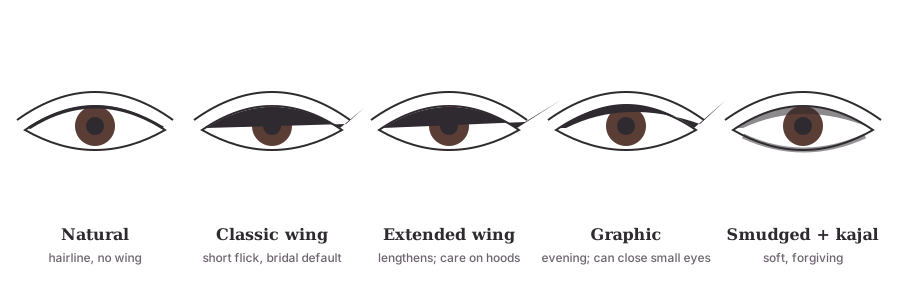
- Natural / hairline liner: a thin line hugging the lashes, no wing. Definition without a visible "liner".
- Classic wing: a short flick angled up along the line of the lower lashes. The bridal default.
- Extended wing: the same angle, longer. Lengthens the eye; suits almond and round eyes; needs care on hooded eyes.
- Thick / graphic: a bold line and wing. Editorial, evening; can close a small eye.
- Smudged / smoky: pencil blended out with a brush, often with kajal below. Soft, romantic, forgiving.
Placement by eye shape
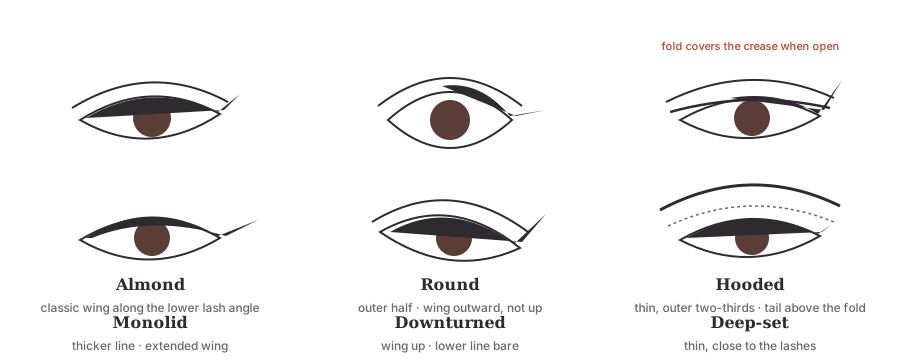
Identify the shape with the eye open and relaxed, straight into a mirror: is the crease visible or covered by a fold of skin (hooded)? Is there a crease at all (monolid)? Do the outer corners sit above, level with, or below the inner corners (upturned, almond, downturned)? Is the eye set deep under the brow bone?
Almond
Outer corners slightly higher than the inner corners; a visible crease; the classic proportion.
- Almost anything works. A classic or extended wing following the lower lash line; a full lid line; tightlining alone for a natural look.
Round
Height close to width; a lot of white visible; often a visible crease.
- Lengthen: concentrate the line on the outer half and extend the wing outward more than upward. Keep the inner corner bare. Avoid a thick line all the way round, which shrinks the eye.
Hooded
A fold of skin covers part or all of the crease when the eye is open; the lid space is small and disappears further when the eye opens.
- Draw with the eye open. Keep the lid line thin, concentrate it on the outer two-thirds, and angle the wing upward so its tail sits above the hood when the eye is open — a wing drawn along the lower lash angle can vanish into the fold. Long-wear gel or liquid, set well; pencil transfers onto the hood. Tightlining does much of the defining work.
Monolid
No visible crease; a smooth lid from lashes to brow.
- A thicker line reads on a monolid where a thin one disappears; extend the wing outward and slightly up for shape. Gel or liquid. Tightlining thickens the lash line without taking lid space. Smudged pencil with kajal below suits a soft look.
Downturned
Outer corners sit lower than the inner corners.
- Lift: an upward-angled wing starting slightly before the outer corner, more liner on the upper lash line, and the lower line soft or bare. Avoid dragging any line downward at the outer corner.
Deep-set
Eyes sit back under a prominent brow bone; the lid is often in shadow.
- Keep the line thin and close to the lashes so it does not deepen the shadow further; light, soft colours on the lid; a small, neat wing rather than a heavy one. Tightlining is ideal.
Most eyes combine two of these. Read the eye open, decide which trait matters most for the look, and let the photograph decide the rest.
Eyeliner for brides and photographs
- Longevity first: a primed, set lid, a long-wear gel or liquid on the lid, waterline kajal set with a dark powder shadow pressed over it, and a waterproof formula for haldi, mehendi and tearful moments.
- Symmetry is checked from arm's length, then in a photograph — the camera exaggerates a difference the mirror forgives.
- Thickness scales with distance. A wing that looks bold in the mirror reads as fine from the mandap; bridal liner is usually a touch stronger than daytime liner, but never thick enough to close the eye.
Common mistakes
- Drawing the wing with the eye closed and being surprised when it opens.
- A gap between the line and the lashes.
- Wings at different angles because each was drawn "by eye" rather than mapped.
- Thick liner all the way round a small or round eye.
- Kajal on a hooded lid — it transfers within the hour.
- Sharing pencils, or not sharpening before every client.
From Chhaya Yadav's experience
Observations from bridal work and teaching in Jaipur — professional observations, not statistics.
- Hooded eyes are common among my brides, and the hood eats the wing. The rule in the studio is: draw open, aim the tail above the fold, gel only. A bride who says "my eyeliner always disappears" almost always has a hood and a pencil.
- Kajal in the waterline plus a wing on the lid is the look most brides want, and it is the pair most likely to smudge in a June heat. Pressing a black powder shadow over the set kajal is what keeps it in place through a long function.
- Students draw the wing with the eye closed because it is easier to see. The first correction I make in the eye module is to have them draw with the model looking straight ahead.
- Mapping the tails first ends most of the "one eye is bigger" conversations before they start.
Frequently asked questions
Which type of eyeliner is easiest for beginners? A soft pencil or a felt-tip pen. Pencil forgives wobbles and can be smudged into a soft line; a pen gives a defined line without the control a liquid brush needs. Gel with an angled brush is the professional middle ground once the hand is steady.
What is the difference between kajal and eyeliner? Kajal is a soft, creamy, smudgeable pencil traditionally worn on the waterline and lower lash line for a soft, smoky effect. Eyeliner is a defined line on the lid above the lashes — pencil, gel, liquid or pen. Most Indian bridal looks use both: kajal on the waterline, a wing on the lid.
How do I do eyeliner on hooded eyes? Draw with the eye open and relaxed, not closed. Keep the line thin on the lid, concentrate it on the outer two-thirds, and angle the wing upward so its tail sits above the hood when the eye is open. Use a long-wear gel or liquid so the hood does not transfer it.
What is tightlining? Lining the upper waterline — the skin between the lashes and the eye — with a pencil, so the lash line looks thicker without a visible line on the lid. It is the invisible definition under most bridal and natural looks.
How do I make a wing symmetrical? Map both wings before filling either: a dot where each tail will end, in line with the lower lash line's angle, then connect. Symmetry comes from the same angle and the same tail length, not from identical thickness; eyes are never perfectly symmetrical themselves.
Why does my eyeliner smudge? Oil on the lid, a creamy pencil in heat, or the hood pressing on wet product. Prime and set the lid, choose a long-wear gel or liquid for the lid line, set pencil with a matching powder shadow, and let liquid dry fully before opening the eye wide.
Key takeaways
- Six types, chosen by the line they draw: pencil and kajal soft, gel versatile and long-wearing, liquid and pen sharpest, shadow softest.
- Kajal lives on the waterline; eyeliner on the lid; bridal eyes usually use both.
- Map the tails, draw open, hug the lashes, set — and correct with concealer, not more liner.
- The eye shape decides thickness and angle: thin and upward on hooded, thicker and outward on monolid, outer-half on round, lifted on downturned, close to the lashes on deep-set.
- Hygiene on the waterline is absolute.
Related reading
- Makeup Hygiene for Professionals — the waterline rules
- Colour Theory for Makeup Artists — why brown and plum liners flatter some eyes more than black
- Professional makeup courses at the academy — the eye module is practised on every eye shape
- About Chhaya Yadav